.svg)

9 Whisky Classics You Should Know, Part 2
In part one we covered four foundations: Old Fashioned, Whiskey Sour, Manhattan and Boulevardier. Those give you the basic formulas. These five take it further.
There's one modern classic here, barely twenty years old but already a fixture on menus. One whose whole point is stripping everything unnecessary away. And one that's served hot instead of over ice. Know these five and you'll always know what's in your glass, and what to order next time.
Penicillin
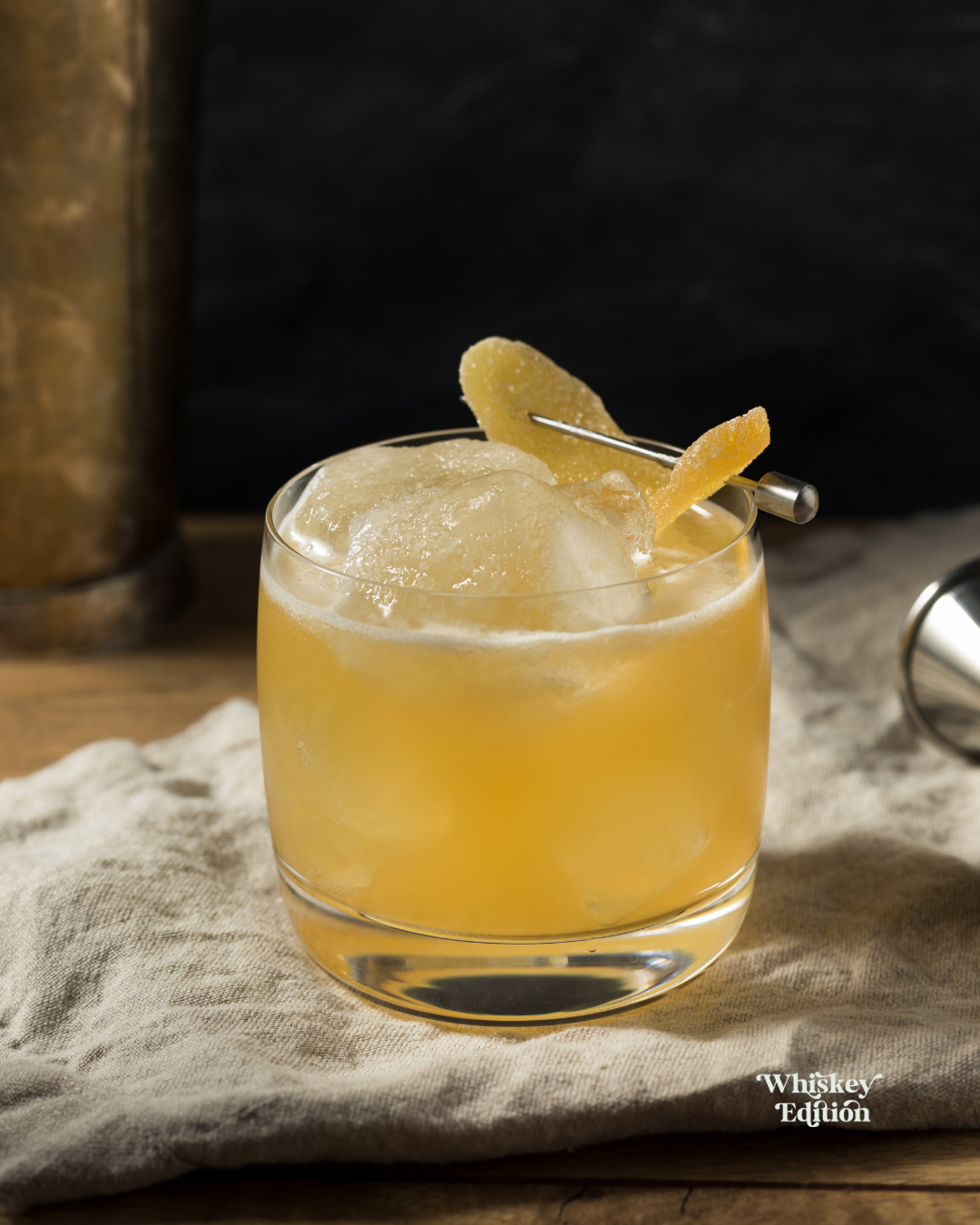
Penicillin is the only drink on this list from this millennium. Bartender Sam Ross created it at Milk & Honey in New York in 2005, and it quickly became one of the best-known cocktails to come out of the 2000s. The name is a joke, not a claim: honey, ginger and lemon are old home remedies for a sore throat, so Ross named his drink after the medicine. It obviously has no medicinal effect and was never meant to, but the joke stuck in people's minds so well it carried the drink to classic status.
The flavour builds in layers. Underneath, there's the brightness of citrus and the warmth of honey and ginger, and right on top, a smoky edge. Islay whisky, the smoky style from the small Scottish island of Islay, gets poured over the top at the end as a float, a thin layer of its own. It doesn't mix into the rest of the drink right away, so the first thing you get from the glass is smoke, and only after that the sweetness and acidity underneath.
Penicillin suits a moment when you want something layered but not heavy. It's also a good first step into smoky whisky: the smoke shows up as aroma and as that top layer, not as the character of the whole drink.
What's in the glass
- Blended scotch, a standard blended Scotch whisky
- Fresh lemon juice
- Honey-ginger syrup
- Islay whisky, poured on top as a float
- Candied ginger for garnish
How it's made
Blended scotch, lemon juice and honey-ginger syrup get shaken together with ice, since citrus and syrup are involved. The mix is strained into a rocks glass over ice, and only at the end is the Islay whisky poured slowly over the top as its own thin layer. The ratio: blended scotch is the largest part, two measures, with lemon juice and syrup each making up clearly smaller but equal amounts. Just enough Islay whisky to cover the surface. Garnish with a piece of ginger simmered in sugar syrup and dried.
Highball
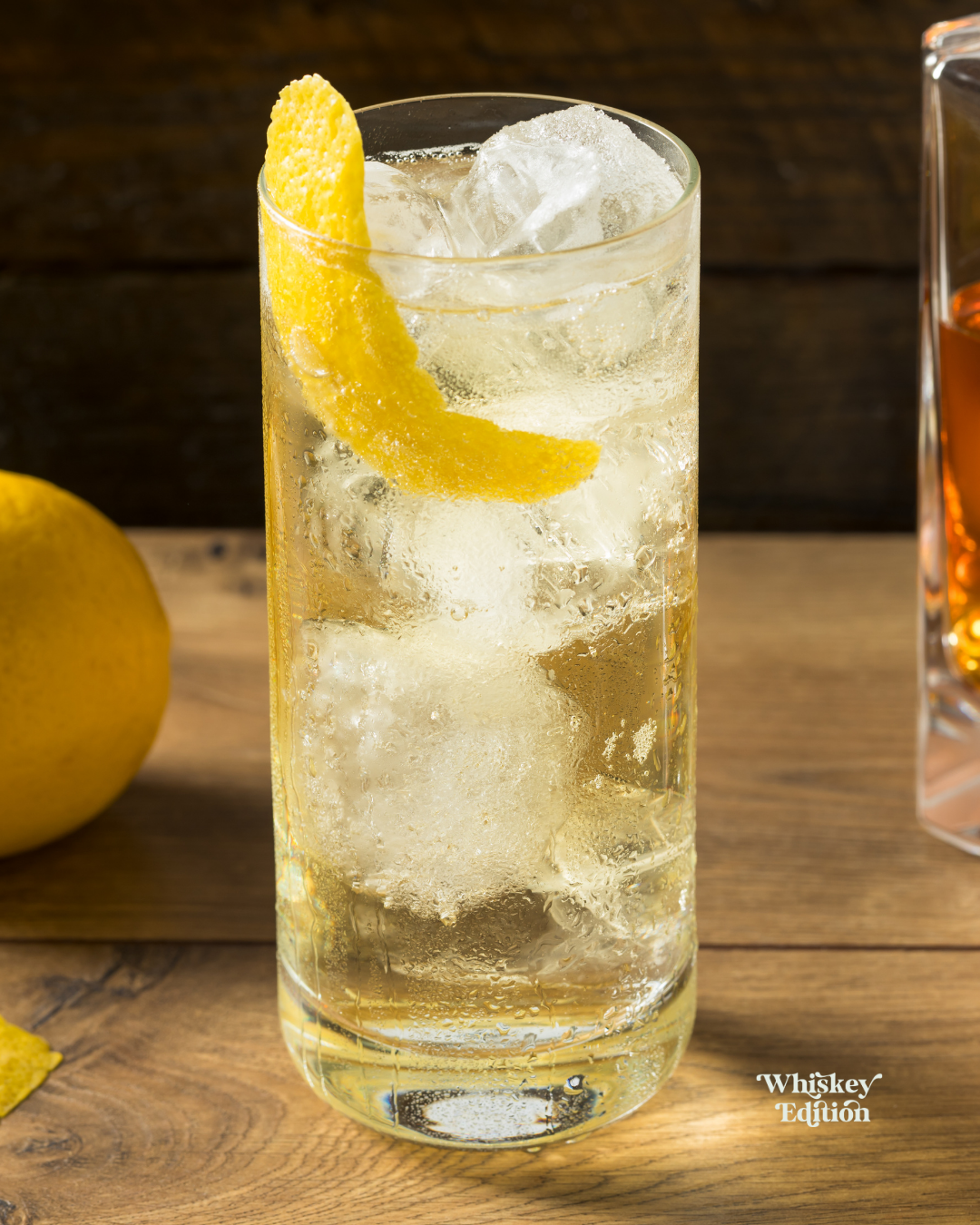
It's easy to assume the highball is a Japanese invention, but it isn't. Lengthening whisky with soda water is an old British-American habit. What's Japanese is what's been done with the idea there: the highball has been elevated into its own craft, where the quality of the ice, the coldness of the glass and the way the soda is poured decide the result just as much as the whisky itself. Done properly, the bubbles are still there right up to the last sip.
The flavour is straightforward but not simple. The whisky's own character, whether fruity, oaky or smoky, stays recognisable, but the soda stretches it out long and crisp. That's exactly why a highball works so well with food: it doesn't smother what you're eating, and the carbonation cleans the palate.
The highball is also a merciless test of a bar's care. There are only two ingredients, so nothing can hide. If the glass is warm, the ice is poor or the soda gets poured in with a splash, you'll notice immediately. But when everything's right, this apparently modest drink can end up the best one of the night, a good choice when you want to stay with one glass for a while.
What's in the glass
- Japanese whisky
- Soda water
- Lemon peel
How it's made
Both the glass and the whisky are kept as cold as possible, and the tall glass is filled to the brim with ice. The soda is poured slowly down the side of the glass, not straight onto the whisky, so the carbonation survives. The drink is stirred with at most one light lift from bottom to top. The ratio runs three to four parts soda water to one part whisky. Finish with a thin twist of lemon peel expressed over the top.
Rusty Nail
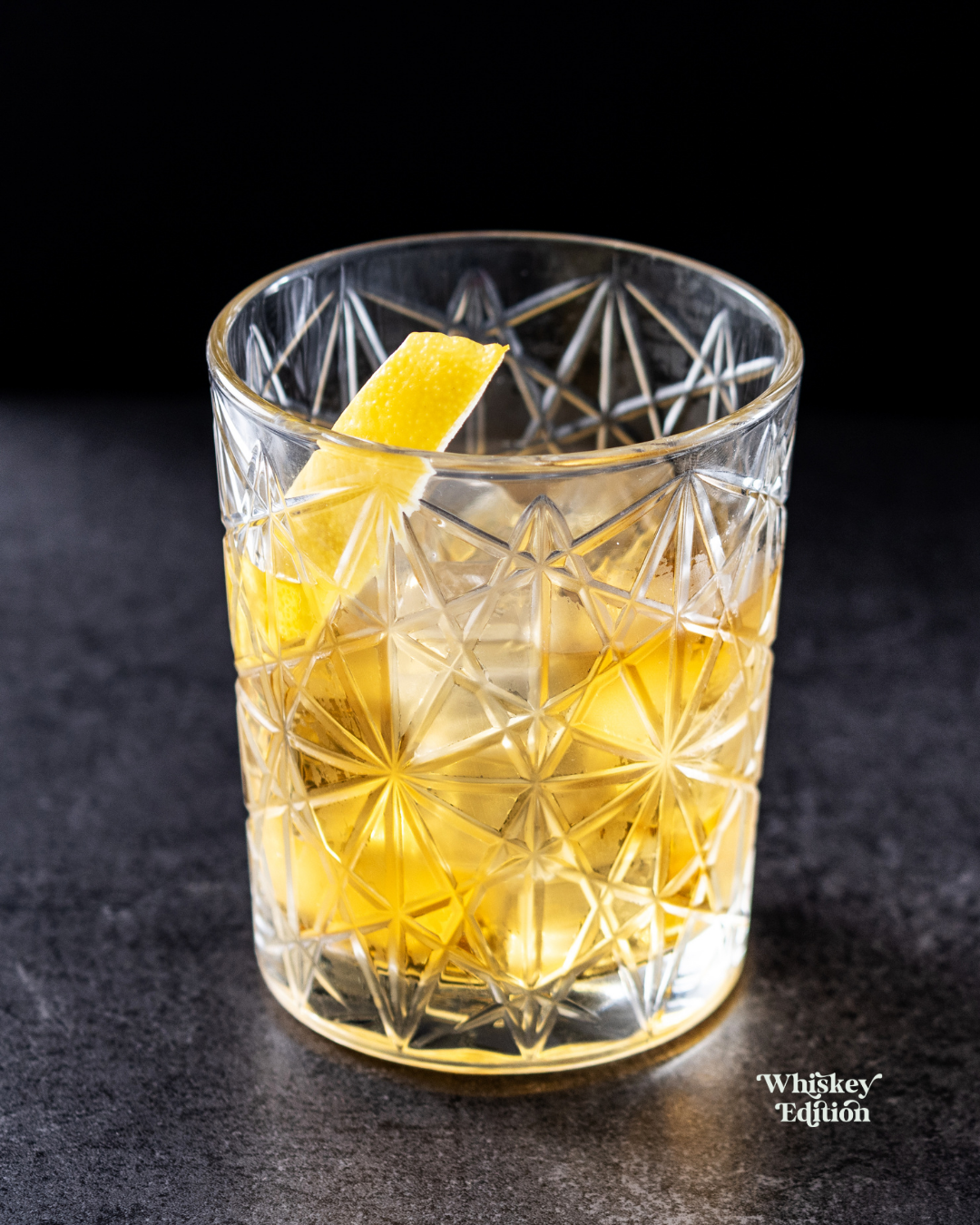
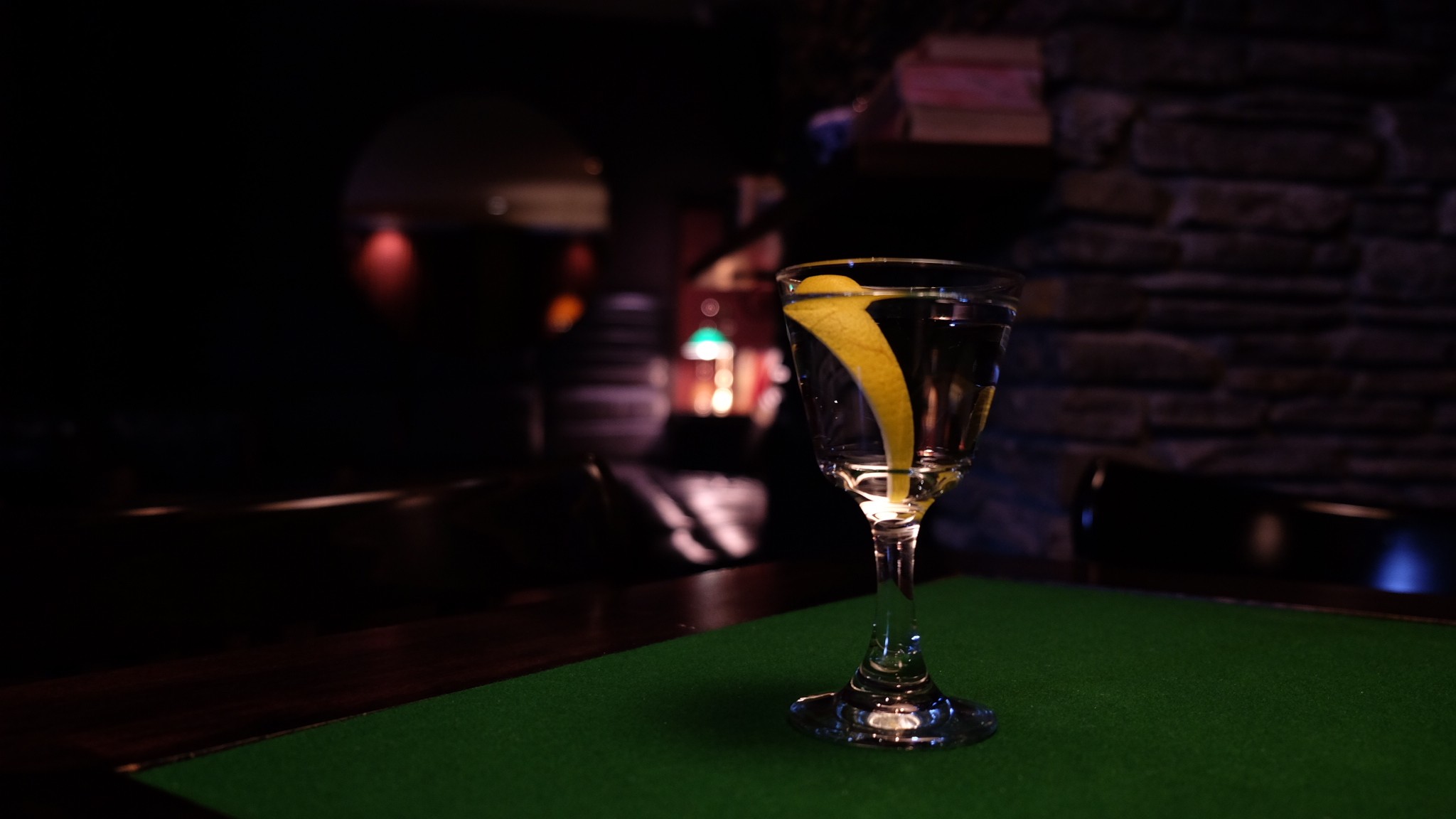
The Rusty Nail is a two-ingredient drink, and what makes it interesting is where the sweetness comes from. It's not sugar syrup, and it's not a liqueur borrowed from somewhere else. It's a Scotch whisky liqueur, built on a whisky base and spiced with honey and herbs. The whole drink stays within whisky: scotch meets its sweeter, more spiced relative, with nothing brought in from outside.
The flavour is rich and warm, closer to dessert than to something refreshing. Honey and herbs soften the sharp edges of the scotch, but the whisky's base note stays audible throughout. This is a late-night drink, one you swirl in the glass rather than rush through.
The name took a while to settle. The same combination circulated in bars for decades under various names, among them D&S, Little Club No. 1 and Knucklehead, before it landed on Rusty Nail in the early 1960s. The name was locked in for good in 1963, when the liqueur maker's managing director used it in The New York Times. Around the same time, the drink is said to have been a Rat Pack favourite, which can't have hurt its spread.
Two established styles exist too, an older sweeter version and a newer, drier one. Neither is wrong, and if you order it drier or sweeter, a good bartender will know exactly what you mean. It's also a good drink for anyone who finds scotch on its own still a bit too austere.
What's in the glass
- Blended scotch
- Drambuie, a Scotch whisky liqueur made with honey and herbs
- Lemon peel
How it's made
The Rusty Nail is built straight in the glass: ice first into a rocks glass, then the scotch and Drambuie, stirred briefly right there. Nothing is shaken or mixed in a separate vessel. In today's drier style the ratio is two parts scotch to one part liqueur, while the older, sweeter version is made half and half. Finish with a thin twist of lemon peel expressed over the top.
Mint Julep
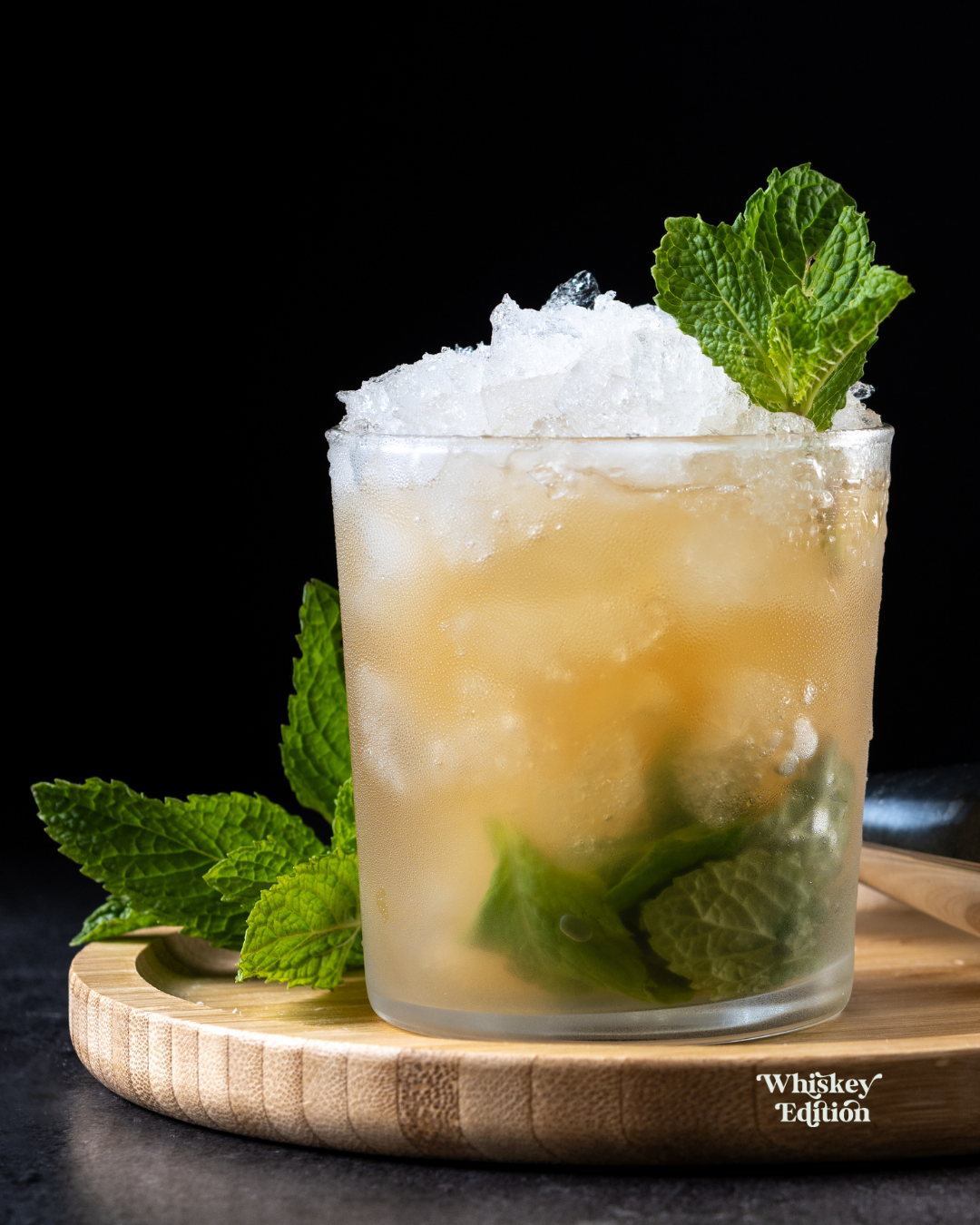
The Mint Julep is about subtraction. Whisky is the only liquid in the drink: no juice, no syrup, no mixer. All the flavour comes from three things, bourbon, fresh mint and just enough sugar to let the mint come through. The result is surprisingly layered for something this spare: mint on the nose first, then the warmth of the bourbon, with the cold of crushed ice running underneath the whole time, softening slowly as you drink.
Traditionally the Mint Julep is served in a metal cup, not a glass, and that's part of the drink's idea, not just a style choice. Crushed ice frosts the metal surface almost instantly, and the cup stays cold in your hand for as long as you're drinking. The cold is part of the experience in your hand, not just in your mouth.
In our photo, though, the Mint Julep is in a glass. That's a deliberate choice: the images in this whole series are meant to show the structure of the drink clearly, and a metal cup would hide exactly what the picture needs to show, the mint, the ice and the whisky. At the bar, you'll most likely get it in a cup, and that's how it should be. If you see it in a glass, now you know what's missing.
What's in the glass
- Bourbon
- Fresh mint
- Sugar
- Crushed ice
- A large mint bouquet
How it's made
Mint leaves and sugar are pressed gently into the bottom of the cup, just enough to release the mint's aroma without tearing the leaves, since handling it too roughly turns the flavour bitter. Crushed ice and bourbon go on top, and the drink is stirred until the outside of the cup frosts over. The ratio is simple: whisky is the only liquid, and there's only as much sugar as it takes for the mint to come through. Finish with a generous mound of ice and a large mint bouquet set on top, close enough to smell with every sip.
Irish Coffee
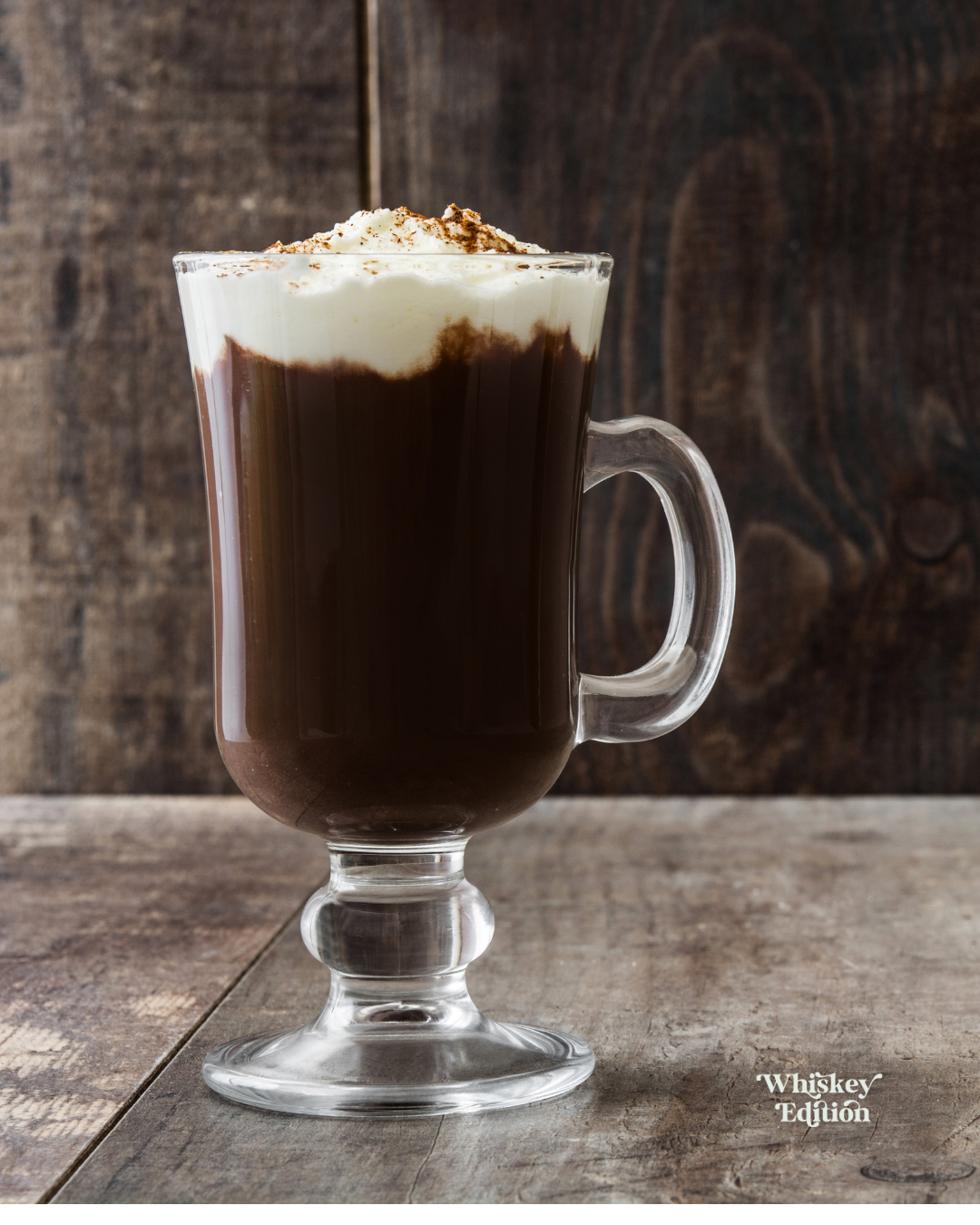
Irish Coffee is the only hot drink on this list, and it changes the rules entirely. It's built on fresh hot coffee, and the whole structure depends on lightly whipped, still-pourable cream floating on top of the coffee as its own layer. You drink it through the cream without stirring: every sip starts cool and soft, then turns hot and strong.
This is also the drink on the list that goes wrong most often. The most common way to ruin it is squirting canned whipped cream on top. It's too airy and too sweet, and it sits on the surface as its own clump instead of letting the coffee come through underneath. Properly whipped cream is beaten just enough to float, still pourable, not stiff. And an Irish Coffee shouldn't carry nutmeg or any other garnish. The clean line between coffee and cream is the whole drink; anything sprinkled on top breaks it.
Irish Coffee suits the dark part of the year and the end of an evening, that moment of coming in from outside. It's also a good reminder that with only a few ingredients, technique decides everything: the thickness of the cream layer is what makes or breaks it.
What's in the glass
- Irish whiskey
- Fresh hot coffee
- Brown sugar
- Lightly whipped, pourable cream
How it's made
The stemmed glass is warmed first, so the coffee doesn't cool down right away. Sugar is dissolved into the hot coffee, the whiskey is added, and the cream is poured very gently over the back of a spoon at the end, so it settles on top as its own layer. The ratio: coffee makes up roughly twice the whiskey, just enough sugar to keep the cream afloat, and only a thin layer of cream. No garnish.
Nine classics
Put these five together with the four from part one and you've got a full set: whisky menus stop being a mystery after this. You don't need measurements or recipes. It's enough to recognise the structure: is the drink built straight in the glass, shaken with citrus, or stirred until clear, and what goes into it.
Drink School continues, so subscribe to HDF Weekend. We don't publish measurements, we teach you to recognise the drink. The same goes for Helsinki Drink Festival Whiskey Edition 2026, where you can ask the people who make these drinks directly.