.svg)

9 Whisky Classics You Should Know, Part 1
The same whisky can turn sweet and slow, sharp and bright, clear and cutting, or hot and creamy. It all depends on what's built around it. These nine classics are the ones any good bar can make without a recipe card, and together they cover the core formulas of the category. Learn these and you'll recognise everything else too: you'll always know what's in your glass, and what to order next time.
This is a two-part series. In this first part we cover the four cornerstones: Old Fashioned, Whiskey Sour, Manhattan and Boulevardier. We're not publishing measurements here, we're teaching you to recognise the drinks.
Old Fashioned
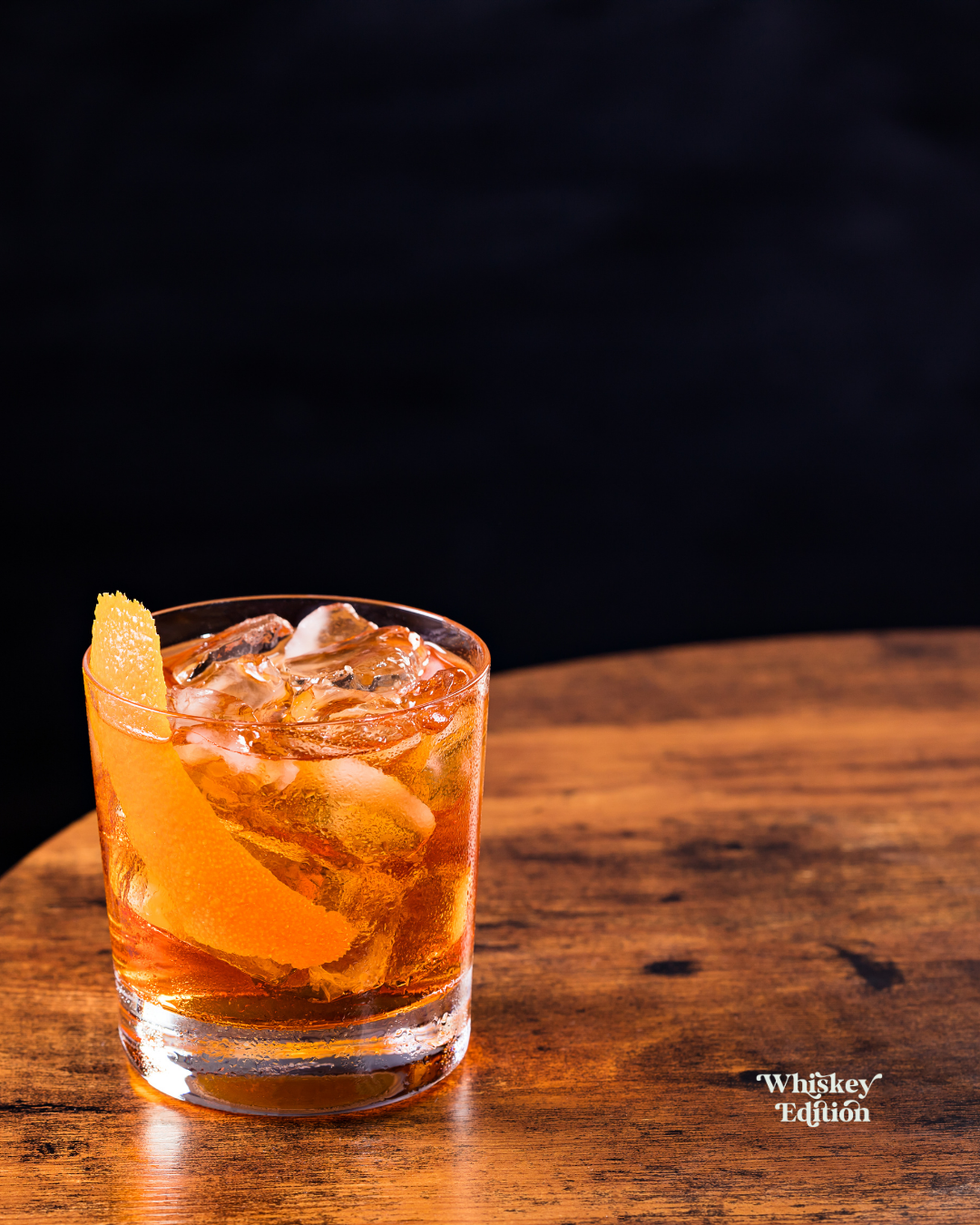
The Old Fashioned is about as close as you get to what the word cocktail originally meant: spirit, a touch of sweetness, water and a few dashes of bitters, a strongly spiced aromatic extract used only by the drop. These days the water comes from the ice. Nothing else. The name tells its own story. The most common explanation goes like this: as bars in the late 1800s started piling more and more ingredients into their drinks, some customers wanted to stick with the old formula and asked for their drink made the old fashioned way. The name stuck.
The taste is straightforward. The whisky carries the drink from first sip to last, the sugar rounds off the sharpest edges, and the oils pressed from the orange peel bring a bright aroma that reaches you before the glass does. This isn't a drink that hides behind other flavours. It's made for people who want to taste the whisky almost as it is, just gently balanced.
The Old Fashioned is slow, both to make and to drink. A large ice cube melts at its own pace, and the flavour softens as it goes. That's part of the point: the same glass tastes different at the end than it did at the start.
What's in the glass
- Bourbon, an American whiskey made mostly from corn
- Sugar
- Angostura bitters
- Orange peel
How it's made
The Old Fashioned is built straight in the serving glass, not mixed in a separate vessel. A large ice cube goes into a short, heavy-bottomed rocks glass, and the ingredients are stirred right there with the ice. The ratio is easy to remember: whisky is essentially the only liquid, sugar is just a touch, and bitters come in a few dashes. The orange peel is expressed over the glass at the end, so the oils settle on the surface.
Whiskey Sour
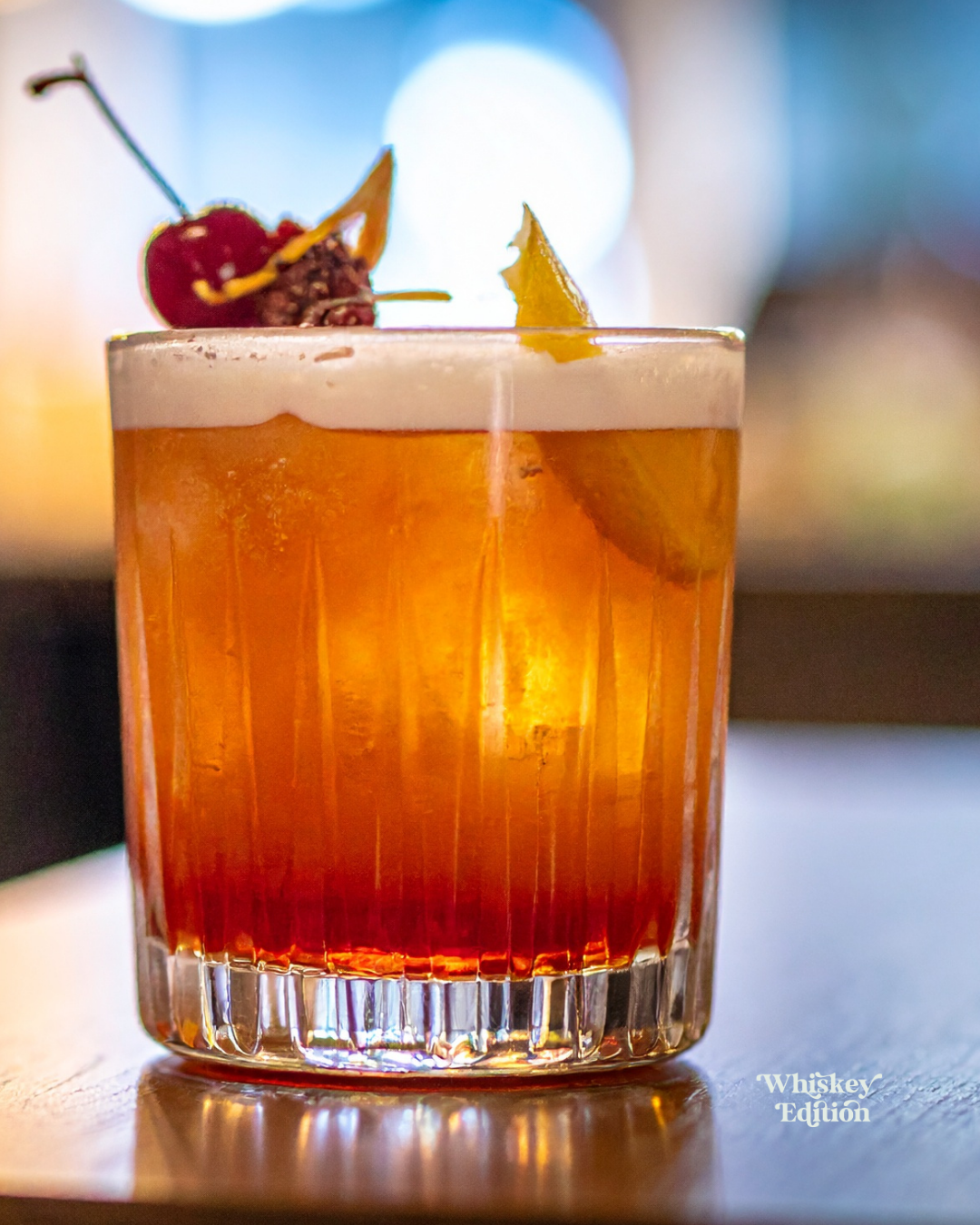
The Whiskey Sour belongs to the sour family: shaken, citrus-forward drinks built around a balance of citrus, sweetness and spirit. It's the easiest of this part's four to approach, because the lemon's brightness softens the whisky's punch.
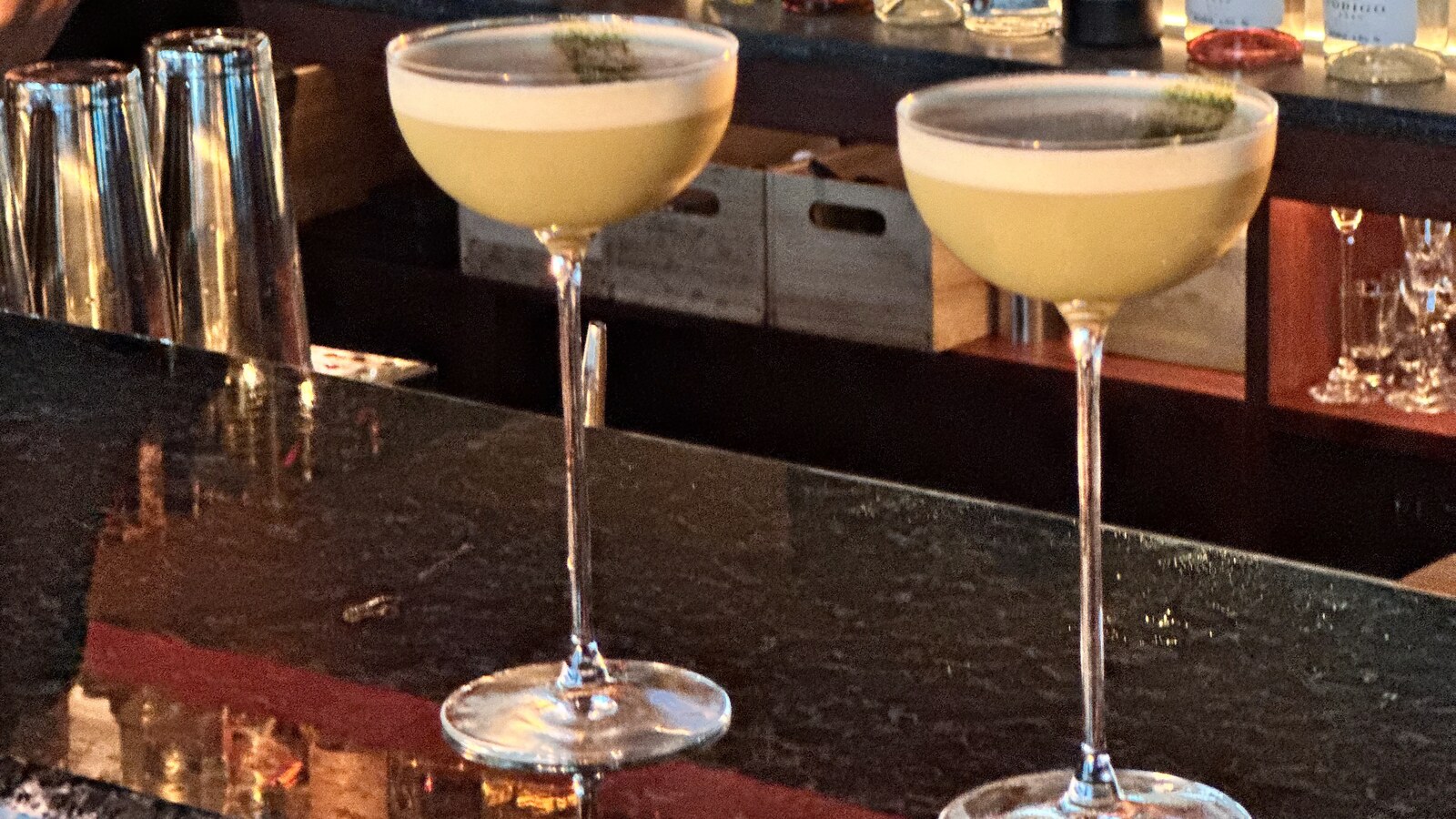
One thing is worth knowing straight away. The classic Whiskey Sour has no egg white in it. Plenty of bars serve a version with a pale, silky foam on top, that drink is called a Boston Sour, and the foam comes specifically from the egg white. The difference sounds small but shows up clearly in the glass: the egg white version is softer and rounder, the version without it is brighter and sharper. Once you know the difference, you know exactly which one to ask for.
In flavour, the Whiskey Sour is tart but not sharp. Sugar syrup rounds off the lemon, and the whisky keeps the drink recognisably whisky-forward. It suits early evening and the start of a meal, a moment where an Old Fashioned would still feel too heavy.
In this series, the Whiskey Sour is served in a rocks glass over ice. Some bars serve it up, without ice, in a stemmed glass, same drink, different presentation. Over ice it stays cold longer and softens gradually toward the end.
What's in the glass
- Bourbon
- Sugar syrup
- Fresh lemon juice
- Cocktail cherry
How it's made
The Whiskey Sour is shaken, not stirred. Shaking is standard for any drink with fresh citrus juice: it chills, combines and aerates the drink all at once. After shaking, it's strained into a rocks glass over ice cubes. The ratio is roughly two parts whisky to one part lemon juice to one part sugar syrup. Garnish with a cocktail cherry.
Manhattan
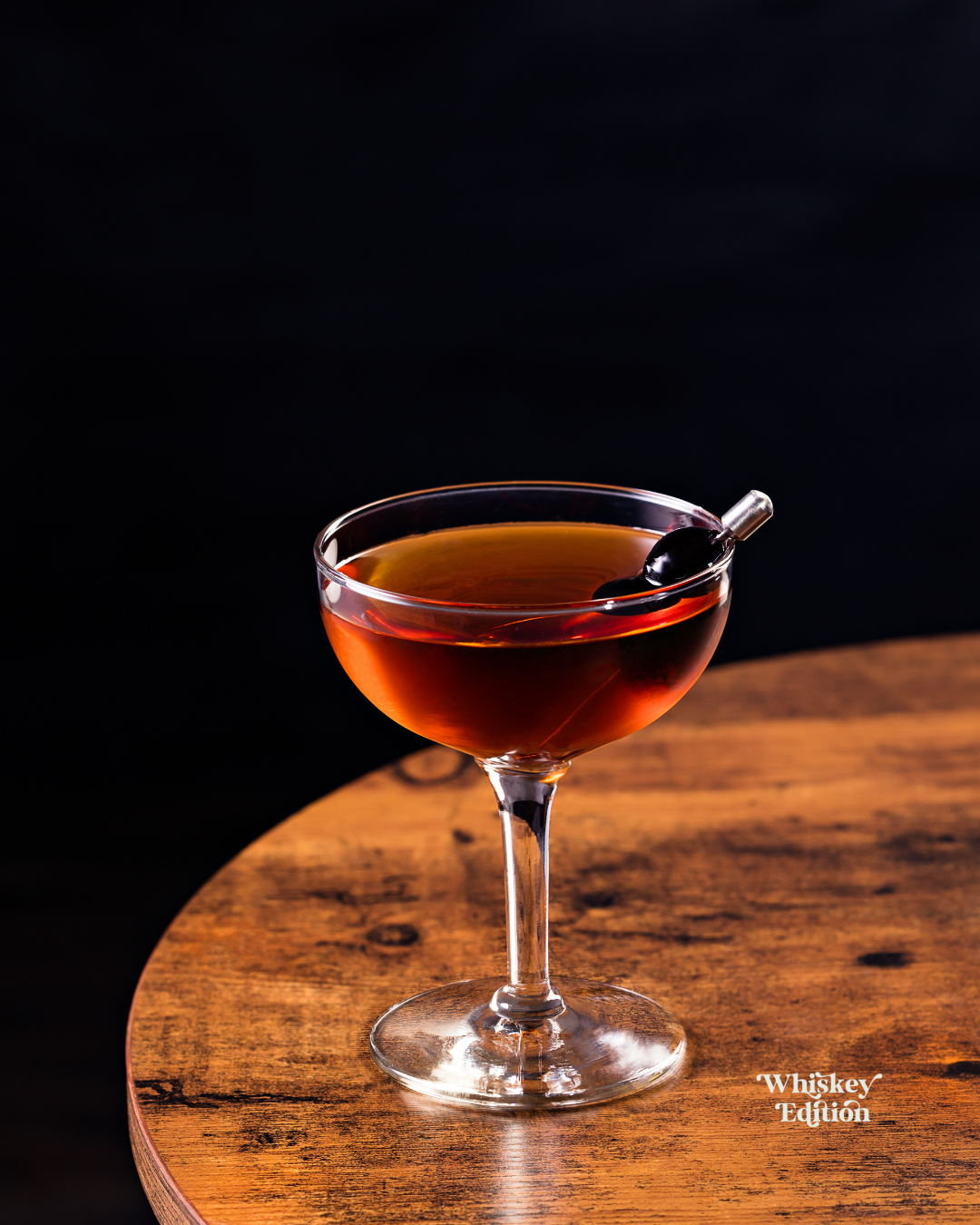
If the Old Fashioned is the cornerstone, the Manhattan is the foundation course. Its structure, spirit, sweet vermouth (a wine-based aperitif flavoured with herbs and spices), and a few dashes of bitters, repeats across dozens of other classics. Learn the Manhattan and you'll recognise the same formula in, for example, the Rob Roy, which is essentially the same drink made with Scotch.
The Manhattan calls for rye whiskey, not bourbon. Rye brings a peppery, slightly dry edge that sets the drink clearly apart from the rounder, sweeter Old Fashioned. Sweet vermouth balances that sharpness, and the result is at once strong and silky.
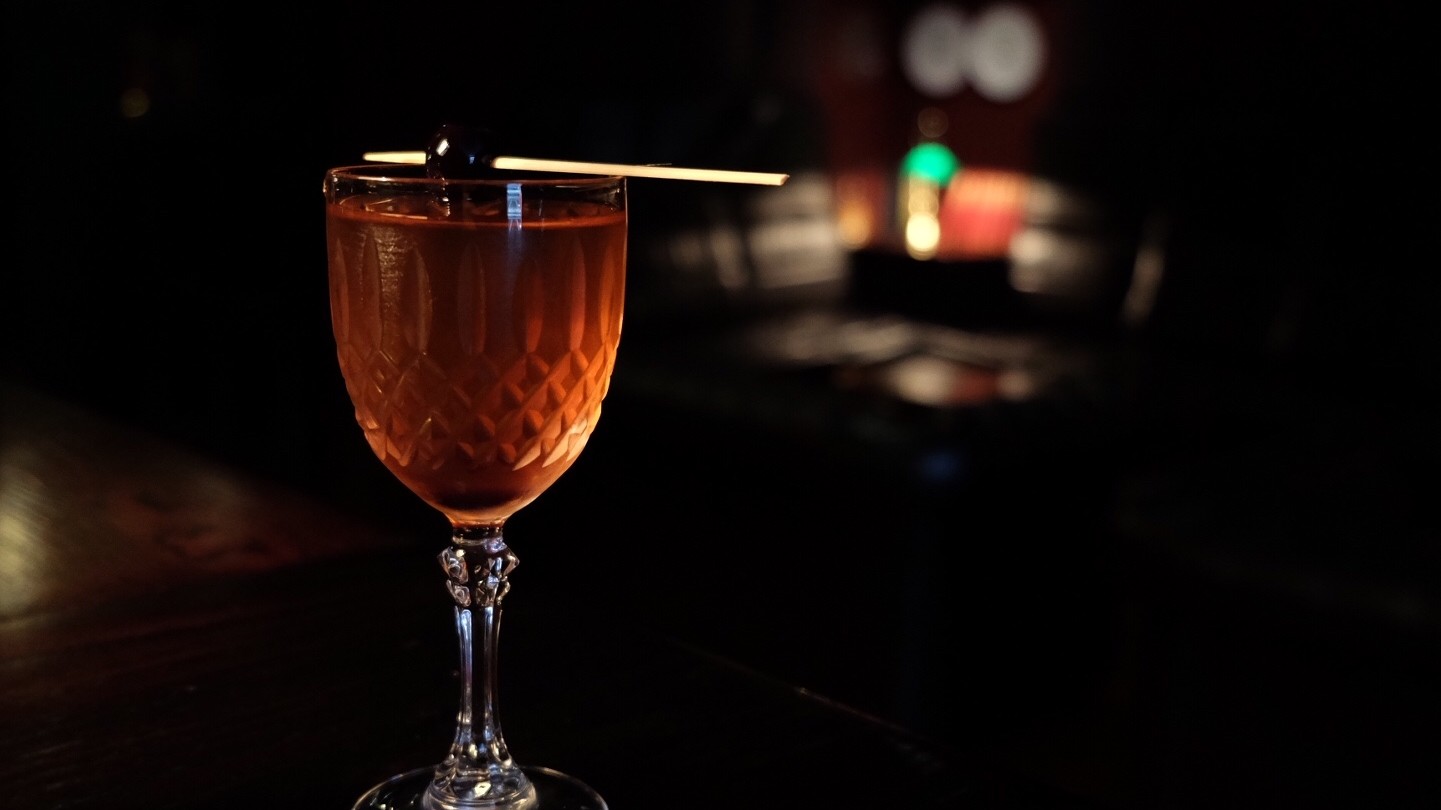
The Manhattan is served without ice, in a coupe, a low, wide-mouthed stemmed glass. That's not decoration, it's purposeful: the drink is already chilled and won't dilute further in the glass, so the last sip hits as hard as the first. The Manhattan is an evening drink, not a thirst quencher: small glass, slow pace.
What's in the glass
- Rye whiskey
- Sweet vermouth
- Angostura bitters
- Cocktail cherry
How it's made
The Manhattan is stirred with ice in a separate mixing vessel, never shaken. Shaking would beat small air bubbles into the drink and cloud it, when the goal is a clear, calm surface. After stirring, it's strained into a chilled coupe with no ice. The ratio is two parts rye whiskey to one part sweet vermouth, with a few dashes of bitters. Finish with a cocktail cherry left in the glass.
Boulevardier
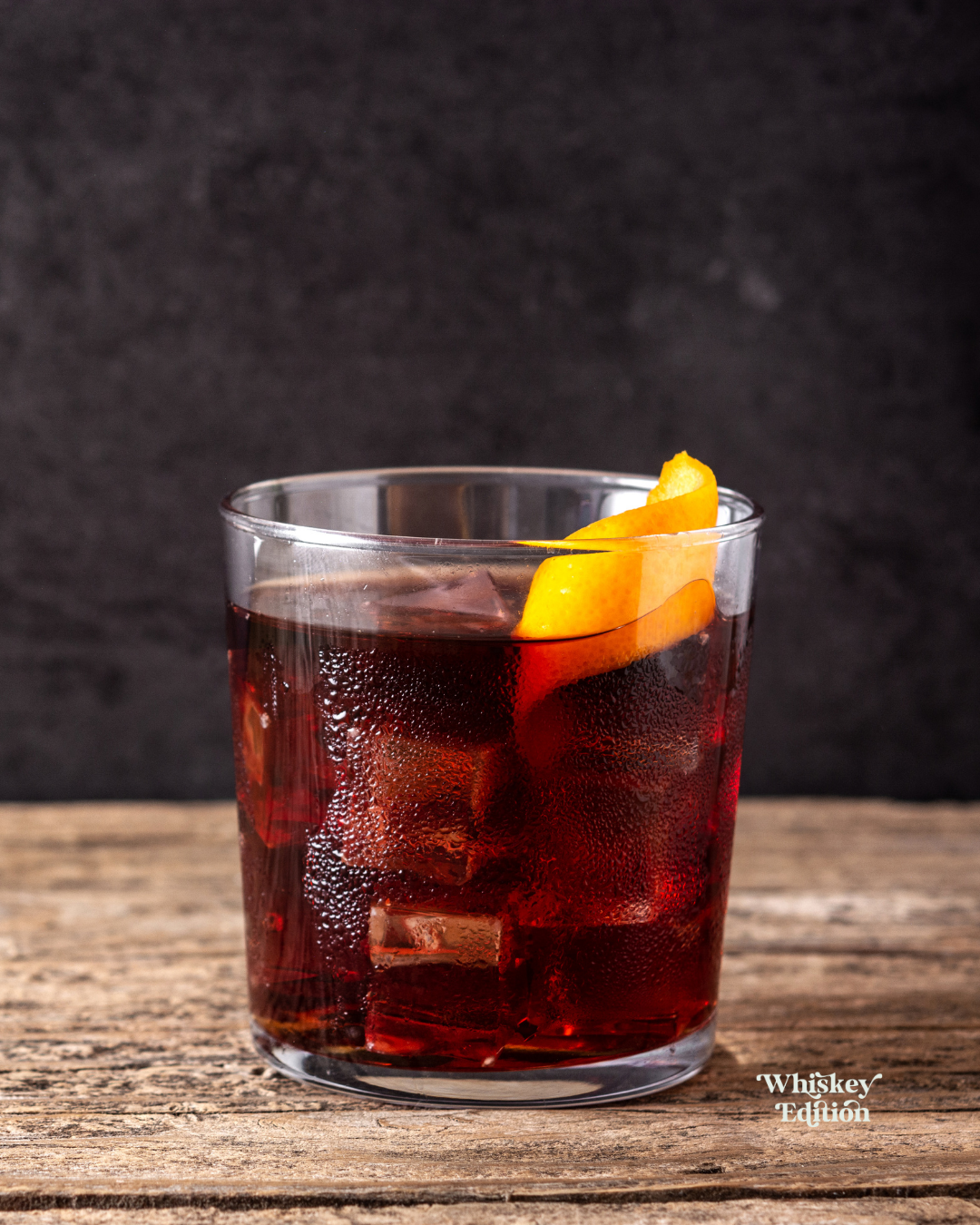
The Boulevardier opens the door to a different flavour world: bitter, aperitif-style mixed drinks. The structure will be familiar to anyone who's ever ordered a Negroni, spirit, a red Italian bitter liqueur and sweet vermouth, in equal or near-equal parts. The only difference is that gin has been swapped for bourbon. It's a small swap, but it changes the drink's whole character: bourbon's vanilla and caramel notes round off the bitterness, and the result is warmer and softer than the juniper-driven Negroni.
The flavour is bitter but not sharp. The closest comparison is dark chocolate: deep, slightly sweet, with a clear bitter finish. The Boulevardier doesn't always click on the first try, but for people who like bitter flavours, it's often the one that sticks.
It suits a slow evening and a long conversation. If you want something that departs from the usual whisky cocktail but still stays recognisably whisky-forward, this is it. And if you already know the Negroni, you already know roughly what to expect, just warmer.
What's in the glass
- Bourbon
- Campari
- Sweet vermouth
- Orange peel
How it's made
The Boulevardier is stirred with ice the same way as the Manhattan, because the goal is a clear, evenly chilled drink. After stirring, it's strained into a rocks glass over a large ice cube. The traditional ratio is equal parts of all three ingredients, though these days bourbon often runs slightly higher than the other two, giving the drink a rounder finish. The orange peel is expressed over the top at the end.
Four down, five to go
These four cover the core formulas of whisky cocktails: built in the glass, shaken with citrus, and stirred until clear. Recognise them, and you'll recognise most of what's on a good bar's menu.
In part two, we continue with five drinks that take the fundamentals further: Penicillin, Highball, Rusty Nail, Mint Julep and Irish Coffee. There's one modern classic, one whose whole idea is simplicity, and one that's served hot.
Drinks school continues, subscribe to HDF Weekend so you don't miss part 2. The same topics come up at Helsinki Drink Festival Whiskey Edition 2026, where you can ask the people behind it directly.