.svg)

What Is Peat? The Story of Islay's Smoke
Your first peated whisky splits the table in two. One person asks why their glass tastes like a campfire. The other orders another round. Both answers start in the same place: a bog. Here's peat explained without the jargon, so you know exactly what's smoking in your glass and how to work your way into it.
What is peat, actually?
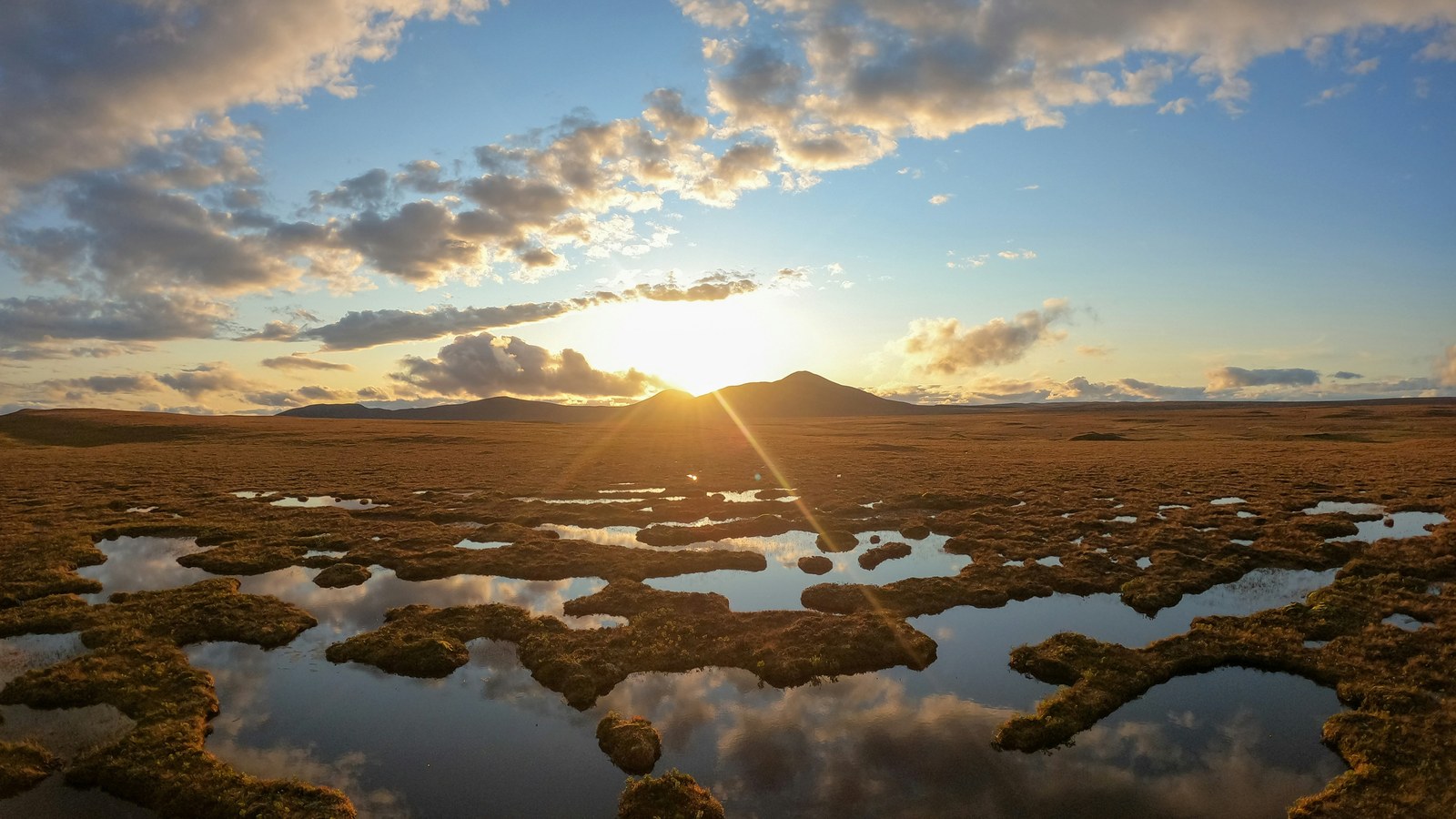
Peat is plant matter compressed in a bog over thousands of years: heather, moss and other vegetation that decayed slowly underwater. A bog grows about a millimetre a year, so a metre of peat is roughly a thousand years old. When a distillery cuts peat for the kiln, it's burning actual prehistory.
How does the smoke get into the glass?
The smoke comes from malting, not the cask. When germinated barley is dried over a peat fire, phenolic compounds from the smoke cling to the grain and ride through fermentation and distillation into the finished whisky. On Islay, the practice started out of necessity: no wood, plenty of peat. That necessity became the island's signature flavour.
The three levels of smoke
Peated whisky isn't one flavour, it's a scale. Smokiness is measured in ppm (parts per million): how much phenolic compound from the smoke ended up in the malt during malting. The higher the number, the smokier the malt. One thing worth knowing before you go further: ppm is measured in the malt, not the finished whisky – distillation and years in the cask soften the smoke, so treat the number as a rough guide, not a precise gauge.
Levelppm (in the malt)What it tastes likeExamplesLight smokeapprox. 2–8Smoke stays in the background and softens things – an easy way in.Bunnahabhain, SpringbankMedium smokeapprox. 20–25Campfire comes through clearly but still leaves room for other flavours.Highland Park, Bowmore, TaliskerHeavy Islayapprox. 35 and upA full smoke storm: tar, plasters, seaweed.Lagavulin, Laphroaig, Ardbeg, OctomoreRough rule of thumb: the further down the table you go, the closer the glass gets to the fire. Light smoke works as an easy entry point. Heavy Islay is already a hobby of its own.
What does peated whisky actually taste like?
The tasting notes sound strange but they're accurate: campfire, tar, plasters, seaweed, salt. Coastal peat brings a briny edge to the glass, while inland peat leans more woodland and earthy. The detail people miss most: there's almost always sweetness, fruit or honey sitting behind the smoke. That contrast is what makes peated whisky addictive.

How to start with peated whisky
Work up to it in stages. Start with light smoke, move to medium, and save Islay for last: order decides the night, because heavy smoke flattens anything that comes after it. Another good method is tasting an unpeated and a peated whisky side by side – the difference teaches more than any article. And the myth that won't die: peated whisky isn't only for veterans. Light smoke is plenty of people's first favourite.
Peat is thousands of years of bog, an island’s history, and one of the whisky world's most distinctive flavours – from a light whiff to a full storm. Want to taste the whole scale in one night? HDF Whiskey Edition brings the peated whiskies together under one roof at Vanha ylioppilastalo, 9–10 October 2026. And if you want more whisky basics, read single malt vs blend, what's actually the difference.
HDF Media guide
How to taste through the scale
Go light to heavy: start with light smoke (approx. 2–8 ppm), move to medium smoke (approx. 20–25 ppm), and save Islay (approx. 35 ppm and up) for last – heavy smoke flattens whatever follows it. Even more instructive: taste an unpeated and a peated whisky side by side.
Event
HDF Whiskey Edition · 9–10 Oct 2026 · Vanha ylioppilastalo, Helsinki